Wednesday, March 28, 2012

Apple Computer and Blair Witch Project

Associated with the essay, The Force of Callas' Kiss: The 1997 Apple Advertising Campaign, "Think Different" by Ronald E. Shields. From the text book, Visual Rhetoric: A Reader in Communication and American Culture


Three film students go missing after traveling into the woods of Maryland to make a documentary about the local Blair Witch legend leaving only their footage behind.  Filmed with a hand cam.  Marketed on the internet.  1999.


Official Website.  Link here.

Discuss - Is seeing believing?


5 Social Media Lessons Marketers Can Learn From The Blair Witch Project
Forbes recently named The Blair Witch Project the best ever social media campaign and Associated Press writer Christy Lemire called it the mother of all movies with viral buzz. The film just got a Blu-ray DVD this month and since its October, which means it’s Halloween time, I’ve decided to celebrate by looking at five keys to the film’s promotional campaign and a lesson to be learned from each.

1) Unmarketing

Key: The filmmakers focused on story; not their product and not themselves. They didn’t stop with the tangible real world specs of their product, they went beyond that and let storytelling create a spectacle, which sold the film.

Lesson: Entertain; don’t sell. It’s what’s known as unmarketing. Instead of pitching people on your product, entertain them. As long as your brand is at the center of all that you do, people will associate the entertainment with your product. When you make things fun, entertaining, mysterious, intriguing and exciting you don’t have to market your product; it markets itself.

2) True Audience Targeting

Key: They took their message to the people that wanted to hear it. They didn’t wait for anyone to come to them; they sought out their target audience. From the beginning, the filmmakers reached out to potential fans on message boards. As money became attached to the film, their target audience was also reached via the Sci-Fi Channel and the recruitment of street teams.

Lesson: Know your audience and go find them. Instead of throwing you message out there and hoping it connects with someone, seek out your audience and try to start a conversation with them. Tap into the audience’s culture, reach them through their peers, influencers and the media they actually use.

3) Put Money Where Your Audience Is

Key: Similarly to true audience targeting, the producers didn’t use mainstream advertising outlets until there was already money in the bank. They used alternate means to advertise, let their online buzz and the success of their limited opening weekend pave the way to a victorious wide release weekend. The addition of mainstream advertising for the film’s fourth week in release then pushed the film to additional success (number two on the weekend box office charts for the second week in a row with a take of $24.3 million).

Lesson: Just because it’s there and just because that’s the way it has always been done, doesn’t mean you have to use mainstream advertisers. With The Blair Witch Project, they zeroed in on their niche audience and then used that as leverage. By the time they put down big advertising dollars, they had practically guaranteed a return on those funds.

4) Make ‘Em Want More

Key: Their campaign always left people wanting more. Like the film itself, never did you get to see, hear or know the whole story. The film played on our fears of the dark, the woods, the unknown and the super natural, while also letting our imaginations and desires to believe in ghosts, witches and legends run wild. The campaign behind the film touched on those same fears and had all of our imaginations conjuring up horrible thoughts and visions.

Lesson: Sometimes less truly is more. There was actually quite a bit of information on the Blair Witch at the time it was released, but none of it explained the film or let those that believed it was real know it was fake. This isn’t something I recommend everyone tries as it is a huge risk. If you leave your consumer wanting too much and then they feel your product doesn’t deliver what they expected, they’re not happy. This is why I think many dislike this film and why they also dislike a lot of M. Night Shyamalan’s stuff. (By the way, Catfish has completely hooked me by using this technique.)

5) Connect the Dots (Even If You’re Not Connecting Any Dots)

Key: Filmmakers Daniel Myrick and Eduardo Sánchez tied their campaign altogether with a website that was ahead of its time. Many people forget, but movie websites were pretty damn boring back in 1999. Photos and information was about the most you could expect from them. With BlairWitch.com the website was an extension of the film that sold the film without selling it. Every bit of information put out about that the Blair Witch was meant to spark interest. Once it did, people went online and searched for more information. It all worked as advertising for their website, which only confused people more and further led them to believe the story was real. This of course pushed everyone in to talking about and having to see it. We rushed out to see the film as soon as we could. It delivered with scares and more mystery and this left many of us wanting even more. That’s genius filmmaking. That’s genius storytelling. But more importantly, its genius branding.

Lesson: Websites are more than brochures filled with facts. With blogs and social media sites, many of us have gotten lazy and don’t see the need for up keeping websites. But a company or product’s website is the glue that holds its brand all together. It can be a portal into your online solar system and a home base that all your secondary sites funnel to. It’s the one place online that you fully control the message of your product or company. If your intention is to lead people into thinking something is so when plenty of other sites say it isn’t, make sure your website is getting the job done. Author is Chad Freeman. Source link here.

Friday, March 9, 2012

Platforms for Expression

Platform - an opportunity to voice one's views or initiate action.
Venue - a place where something happens.
Medium - a means by which something is communicated, determined by it's materials and method of production.


All In The Family, 1971-1979.
The Jefferesons, 1975 -1985.


Source link here.


Studio 54, Manhatten, 1977 - 1981.


Mudd Club - named after Samuel Alexander Mudd.  Club located in Manhatten, open 1978 - 1983.


"Whether playing a gig at CBGB or sipping champagne at exclusive galleries, Basquiat was ensconced in a primarily white world. Yet, his work demonstrates a strong black identity. His paintings pay homage to Charlie Parker, Jimmy Hendrix and Malcolm X. The triple spiked crown and halo are quintessential Basquiat symbols repeated in his narratives, in which he anoints his heroes with an angelic, mythic or martyr status. Social injustice, materialism and racism are addressed head on, with great irony and little subtlety in paintings such as Jim Crow, Irony of the Negro Policeman and Per Capita. In honoring Charlie Parker, Dizzy Gillespie, Nat King Cole and others, Basquiat drew a connection between an artistic iconography which he admired, and of which he himself eventually became a part." A Review of Basquiat: A Slam Dance on Canvas, CAmille Collins. Source
link here.

"When MTV started, there were so few music videos that the network scrambled for content. Many early videos came pouring out of Britain — from acts such as Duran Duran, A Flock of Seagulls, ABC, Joe Jackson and the Police — in a parade the early MTV executive Bob Pittman refers to here as “the second British Invasion.” Source link here.


Source is MTV Press. Link here.


Bansky


Source for above image is here.


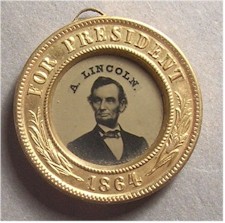
1864 Lincoln campaign token.

Thursday, March 8, 2012

Robert Hughes and the Mona Lisa


Mona Lisa painted by Leonardo da Vinci, oil on board, 1503-1519. location - Louvre, Paris

"Malraux famously honored the president and first lady by promising Mrs. Kennedy at the end of the dinner that he would send to her France’s most famous cultural treasure, La Giaconda, the Mona Lisa. In December 1962, a special loan was made directly to the President of the United States and the American people by the government of the French Republic. Malraux accompanied the painting to the United States where more than 700,000 people saw it at the National Gallery of Art and more than a million others viewed it at the Metropolitan Museum of Art. President Kennedy expressed his appreciation for the loan and stated that, “We will continue to press ahead to develop an independent artistic force and power of our own.”

"In the spring of 1962, JFK created the position of Special Consultant on the Arts. He recognized that the role of the federal government in the arts was historically and constitutionally limited, but nonetheless wanted to have access to advice in those areas where public policy had an artistic dimension—such as in the design of public buildings." Source link here.

Monday, February 27, 2012

Homework, Wilke, Mendieta, Boltanski, Kentridge

In class discussion of contemporary artists.
Homework: Research each artist. Use class discussion notes and info from research to write a one page, single spaced, typed, response paper. This is not a research paper and/or summary of each artist. Do not  list all the info you find about the artist. The paper is to be a discussion of the information you find and the response you have to the information. Include references to visual culture in your discussion. The paper can include all four artists or just one.

I am looking for you to offer a discussion on how each artist is an example of visual culture.  Some prompts for you; Can you relate to any of the artist's content?  Who, do you think, is the artist making the visual work for (who is the audience?)?  Do you think artists should have the freedom to express their own opinions?  Why or why not?  Can you make connections to prior terms/issues discussed in class?


Hannah Wilke.  Link here for more images and to read about the artist.

Ana Mendieta.  Link here for more images and to read about the artist.

Christian Boltanski.  Link here to see more and read about the artist.


William Kentridge.  Read about the film.  You can refer to specific sections in the link provided here. Entitled "The Face and The Landscape".

Tuesday, February 21, 2012

Charts and Diagrams

A Parisian lithograph, late 19th century.  Source link here.

Visual Perception

Optical illusions seem to be popular on science related sites. I don’t usually get into them but I found this one interesting. Take a look at the drawing below. Robert Laws was a Scottish missionary who worked in Malawi in the 1880s and put forward the theory that our visual perception is influenced by one’s culture and environment. What do you see below?Source link here.


Trompe-l'oeil -  |ˌtrômp ˈloi|    
French - deceive the eye, technique, boundary between reality and fiction
Realism - Greece, perfection


Escaping Criticism, Pere Borrell del Caso, 1874.


Camera Picta (Painted Chamber), 1465-1474, Andrea Mantegna, Mantua, Italy, ceiling fresco


San Zaccaria Altarpiece, Giovanni Bellini, oil on panel, 1505, executed in the church of San Zaccaria, Venice.
approx. 16 feet tall by 8 feet wide


Teatro Olimpico (Olympic Theatre), Northern Italy, constructed 1580-1585, Forced Perspective


Oil on canvas, Raphaelle Peale, 1822.  Link here to see more trompe-l'oeil painting at the National Gallery of Art.


Above two images by Jacques Poirier (1928-2002). Source is All My Eyes, link here.


Marilyn Levine (1935-2005), clay


Vanitas    |ˈvanəˌtäs| - Latin - emptiness, vanity, 15th century, life and earth
Attractive Objects
Symbols - skulls, rotten fruit, bubbles, watches and hourglasses, musical instruments, peeled lemon


Vanitas by Pieter Claesz, 1630, oil on panel, 22" x 15.6"


Memento mori - Latin - An object serving as a reminder of death, remember your mortality, remember you will die.
Medieval through Victorian, High death rate, Christianity, Divine Judgement, Ash Wednesday


1600-1650, oil on panel, about 14" x 11"


The Ambassadors by Hans Holbein, oil on oak, 1533, approx. 82" x 81"


Invention of photography.


Away From the Flock by Damien Hirst, 1994, a sheep suspended in formaldehyde in a vitrine. Link here to read about it at the Tate.

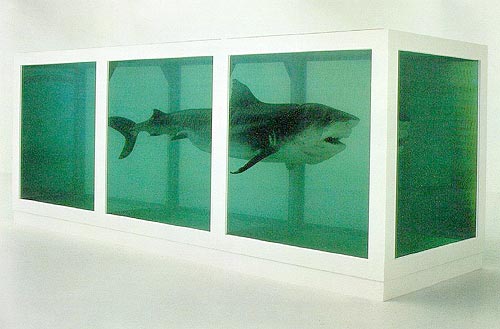
The Physical Impossibility of Death in the Mind of Someone Living by Damien Hirst, 1990's, shark in formaldehyde in a vitrine.