Showing posts with label Semiotics. Show all posts

Sunday, March 14, 2021

Semiotics

Semiotics is the study of signs and their meaning in society. 

  • A sign is something which can stand for something else – in other words, a sign is anything that can convey meaning. 
  • Visual signs - photographs, paintings, drawings, advertisements, street signs.

Icon
  • A visual image that serves as a sign or representation that stands for its object by virtue of a resemblance or analogy to it. Example, an icon of womanhood. 
  • Digital Technology
    • A picture that appears on a screen and is used to represent content or action. 
    • Example, tap the icon to download the app. 
  • People as Icons
    • A person that is revered or idolized. 
    • Example, Elvis Presley is a cultural icon of the 20th century. Migrant Mother Photograph an iconic image for the Great Depression. 
  • Pictorial Images
    • Keeps characteristics. 
    • Example, Instagram icon, Restroom Signage, Handicap Signage. 


Index
  • Indicate something. 
  • Compare to icon - it is not the object itself.
  • Does not resemble the "something". 
  • Has some relationship to the thing it represents - is one step removed. 
  • Connected to another object or event. 
  • Example - A footprint is an index that a person was in a space. 


Symbols
  • No resemblance to the thing it represents. 
  • Can only mean something if person knows (culture or previous knowledge).
  • A learned sign. 
  • Example - The circle/cross shape that signifies the female gender. 


Analyzing subject matter in an artwork, 
specifically symbols whose meaning is understood 
by a people or culture in that specific time period. 
Oranges
Dog
Carved Figure on Bed Post
Brush Hanging from Bed Post
Spotless Mirror
Green Dress and White Cap
Cherry Tree


Great Art Explained in Fifteen Minutes
Basquiat


The Brilliance and Symbolism of Basquiat's Flesh and Spirit
Three Minutes


Explaining the Explosion of Iconography in Basquiat's "Pyro"
Eleven Minutes


Wednesday, March 4, 2015

Semiotics


A Sign - anything that makes meaning.
Can be a word, gesture, image, sound, object.
A sign as two components:
Signifier - the material; object or image being seen
Signified - meaning; message given off by images or object


Icons
clear representation of object itself, keeps characteristics

Index
indicate something
connected with its meaning, not arbitrary
compare to icon - it is not the object itself
example -smiles indicate happiness

Symbols
no resemblance to the real object
a result of convention
can only mean something if person knows (culture or previous knowledge)
Dove for Peace - no connection between the two, a convention
Letters and words are examples of symbols

Exercises:
Use cell phone to find icons, indexes and symbols.
Create indexes.
Make our own symbols.


source for above slides is slideshare

Wednesday, January 18, 2012

Semiotics - Icons and Symbols

SEMIOTICS
Semiotics is the study of signs and symbols and their use or interpretation.  Early 1900's, Swiss linguist Ferdinand de Saussure (1857-1913).  American philosopher Charles Sanders Peirce (pronounced 'purse') (1839-1914).

ICONS
Icon - A representation of the object itself, keeping its characteristics.  Resembles something.  Resembles its object. Can be illustrative, diagrammatic, a photograph or the object/person itself.

People as icons - an image or name, an individual reduced to an idea.

Discuss:
-The ideas people represent.
-How architecture can be iconic.
-Celebrity is the state of being well known.  How does one obtain celebrity status?  In our culture?  Other cultures?  Past cultures?  Do celebrities fuel our/a culture?  How?  Why?


Nelson Mandela was elected as the first African President of South Africa in 1994. Mandela had been jailed for speaking out against apartheid.
Abraham Lincoln was the 16th President of the United States and is known for abolishing slavery in the United States through the enactment of the Emancipation Proclamation and the Thirteenth Amendment to the Constitution of the United States.
Neil Armstrong was the first person to set foot on the Moon. He was the renowned American aviator and a former astronaut, test pilot, university professor, and United States Naval Aviator.
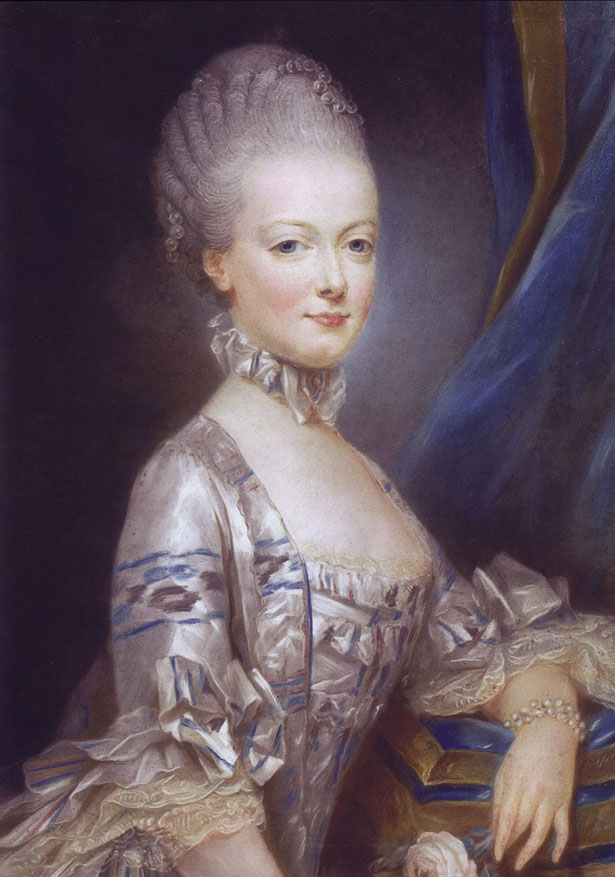
Marie Antoinette was an Archduchess of Austria and the Queen of France and of Navarre. She was the last Queen of France and was famous for her excess in a time of extreme economic hardship for her country.
Muhammad Ali was an American boxer, who remained three times world heavyweight champion in Boxing and is widely considered one of the greatest heavyweight boxers of all time.
Christopher Columbus was a Genoese navigator, colonizer and explorer whose voyages across the Atlantic Ocean led to general European awareness of the American continents in the Western Hemisphere.
Princess Diana was an international personality of the late 20th century as the first wife of Charles; Prince of Wales married Prince Charles. Tireless in her humanitarian efforts, Diana continued to win the hearts of the British people and indeed people all over the world up until her death.
Link here for more images and brief bio of Iconic People.
The White House, Washington D.C., USA.  Source link here for those of you planning a visit to D.C.  Another good link is whitehouse.gov


SYMBOLS
Symbols - No logical meaning for what it stands for. Have no resemblance to the real object, it’s a result of a convention (considered acceptable to most members of a society). A dove represents peace, but there’s no connection between the animal and peace, it’s just a convention. 

A symbol (an image or text) can only make meaning if the person already knows the convention - a matter of culture and previous knowledge.  For each culture the symbol makes meaning.
Color in cultures.

Convention - a way in which something is usually done within a particular area or activity, behavior that is considered acceptable or polite to most members of a society.


Painted in 1434.  cloth, dog, orange, cherries, gaze, red curtains, green for hope, women surround themselves with tokens for fertility, discarded shoes.


Further Reading:
Signs and Language.  Link here.
The Age of the Female Icon by Holly Brubach, New York Times Magazine. Link here.
Perceptions of Female Beauty in the 20th Century by Louise Wood. Link here.