Showing posts with label Homework. Show all posts

Tuesday, February 3, 2015

Radio Lab Homework

Radio Lab
The main page for website is radiolab.org

Listen to the segment entitled American Football.
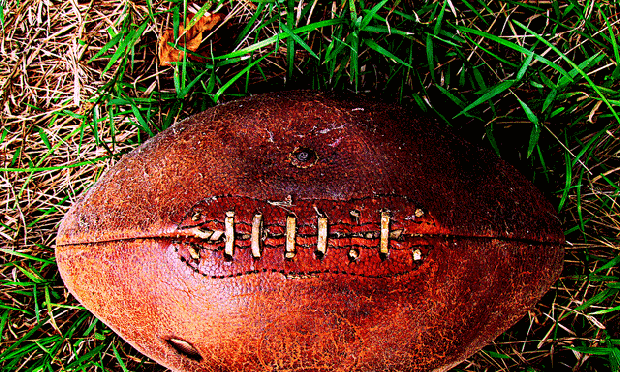
(flickr: Dewayne Neely/ CC BY-NC-ND 2.0)

Find at least three (3) connections to visual culture.
Write down your findings.
Bring to class on Tuesday, Feb. 10 for discussion.

The first link takes you to a Radio Lab website page that introduces the segment.
The second link takes you directly to the streaming.
If for any reason the links do not work, you are equipped with the necessary information to search the internet and find the the segment.

http://www.radiolab.org/series/podcasts/

https://www.wnyc.org/radio/#/ondemand/424416


From the Radio Lab Website:
Today, we tackle football. It’s the most popular sport in the US, shining a sometimes harsh light on so much of what we have been, what we are, and what we hope to be. Savage, creative, brutal and balletic, whether you love it or loathe it … it’s a touchstone of the American identity.
Along with conflicted parents and players and coaches who aren’t sure if the game will survive, we take a deep dive into the surprising history of how the game came to be. At the end of the 19th century, football is a nascent and nasty sport. The sons of the most powerful men in the country are literally knocking themselves out to win these gladiatorial battles. But then the Carlisle Indian School, formed in 1879 to assimilate the children and grandchildren of the Native American men who fought the final Plains Wars, fields the most American team of all. The kids at Carlisle took the field to face off against a new world that was destroying theirs, and along the way, they changed the fundamentals of football forever. 
Correction: An earlier version of this episode included a few errors that we have corrected. We've also added one new piece of information. The piece originally stated that British football had no referees. We clarified that while this was true in the earliest days of British football, they were eventually added. We stated that referees were added to American football in response to Pop Warner. American referees existed well before Pop Warner and they were eventually required to address brutality in the game and the kind of rule bending that Pop Warner specialized in. Chuck Klosterman said that the three most popular sports in the US are football, college football and major league baseball. Baseball actually ranks 2nd, college football is third.  And Monet Edwards stated that 33 members of her family were players in the NFL. That number is actually 13. And we added the detail that over 200 students at The Carlisle Indian School died of malnutrition, poor health or distress from homesickness. The audio has been adjusted to reflect these facts.

Wednesday, September 25, 2013

Homework: Diagram A Movie

Select a movie. Diagram the content. Size of diagram up to you - work on a large piece of craft paper or tape pieces of paper together as your diagram grows. You may also produce a diagram using the computer. Keep in mind, if on computer, you will have to print out to turn in a hard copy. Your diagram should primarily consist of text, but feel free to include imagery (think semiotics!). Draw your own imagery or cut up mags/newspapers for imagery. Below are a few examples of diagrams to get your ideas flowing. There are no rules as to the the type of diagram you should use - feel free to combine different diagram formats.


FLOWCHART
A flowchart is a diagram that shows the breakdown of a task or system into all the necessary steps.
Each step is represented by a symbol and connecting lines show the step-by-step progression
through the task.  The above examples is very simple.
The flowchart can be very complex and detailed. Source link here.

DATA FLOW DIAGRAM
Data flow diagrams are often used to show how an organization
handles incoming data such as a customer order.Source link here.

Source link here.

Source link here.

Source link here


Friday, October 26, 2012

Homework, Outline and One Page Discussion Paper

Prepare an outline and then write a one page paper that discusses one of the topics below.  Feel free to incorporate a compare/contrast approach.  Make connections to class content by using terms we discussed in class. Remember to own your thoughts and proof your paper.  Watch out for the use of "they" and "it".  Use spell and grammar check.  Use a thesaurus to improve vocabulary.  Avoid general references such as "the world", "people" and "everyone" - replace these words with specifics.  

Use homework assignments and class notes to help you with this assignment.

Guidelines for the one page paper:
Typed, single spaced, intro sentences and paragraphs, collegiate vocabulary, connections to visual culture. 
Note: Outline can be handwritten.

Topics:
Photography, Then and Now
Females in Society, Then and Now
Racial Profiling, Then and Now
Visual Marks/Symbols on the Body, Then and Now
Travel, Then and Now
Freedom of Expression (painting, sculpture, architecture, fashion), Then and Now
Industry and Technology, Then and Now


Wednesday, October 24, 2012

Homework, Photography


'The Atlantic" Remembers Its Civil War Stories by Michele Norris.
Link here to read (or listen).  Source is National Public Radio.
HW - Vocab, Summary/Outline, Personal Response (includes connections to course content).


The Spirit Photographs of William Hope
Link here to read and view a collection of images. Source is The Public Domain Review.
HW - Vocab, Summary/Outline, Personal Response (includes connections to course content).


Catching the Shadow of  A Lost World by Petra Mayer
Link here to listen to the story and view a slide show.  Source is National Public Radio.
HW- Vocab, Summary/Outline, Personal Response (includes connections to course content).
For those of you who seek more information and imagery on the photographer Edward S. Curtis, go to the Smithsonian Libraries.  Link here.


In your textbook (Kromm and Bakewell), Chapter 18, Marketing The Slave Trade: Slavery, Photography, and Emancipation: Time and Freedom in The Life of the Picture. pp. 255 - 260.
HW - Vocab, Summary/Outline, Personal Response (includes connections to course content).
Image source link here and here

Monday, October 8, 2012

Homework, David Wilson, Museum of Jurassic Technology


An exhibit of the cultural significance of cats cradle.

An arrow shows the path of a deprong mori.

Rotting dice from the collection of Ricky Jay.

An exhibit of the logical alphabet by Shea Zellweger.

Link to the museum's website here.

Homework:
Watch video posted above.
Read article from Smithsonian Magazine.  Link here.
Read article from New York Times.  Link here.
Vocab, Summary and Personal Response.  If you wish, you can combine all info rather than prepare separately.

Additional Reading (optional):
Revisiting the Museum of Jurassic Technology.  Link here.

Monday, February 27, 2012

Homework, Wilke, Mendieta, Boltanski, Kentridge

In class discussion of contemporary artists.
Homework: Research each artist. Use class discussion notes and info from research to write a one page, single spaced, typed, response paper. This is not a research paper and/or summary of each artist. Do not  list all the info you find about the artist. The paper is to be a discussion of the information you find and the response you have to the information. Include references to visual culture in your discussion. The paper can include all four artists or just one.

I am looking for you to offer a discussion on how each artist is an example of visual culture.  Some prompts for you; Can you relate to any of the artist's content?  Who, do you think, is the artist making the visual work for (who is the audience?)?  Do you think artists should have the freedom to express their own opinions?  Why or why not?  Can you make connections to prior terms/issues discussed in class?


Hannah Wilke.  Link here for more images and to read about the artist.

Ana Mendieta.  Link here for more images and to read about the artist.

Christian Boltanski.  Link here to see more and read about the artist.


William Kentridge.  Read about the film.  You can refer to specific sections in the link provided here. Entitled "The Face and The Landscape".