Friday, August 26, 2022

The Work of Art in the Age of Digital Reproducibility


Link below to read article:


Source is:
Created by Nina
Nina is a Sydney-based brand and graphic designer currently working at Re. Her approach to design is one defined by thorough research, deep investigation, and a constant yearning for knowledge in order to not only solve problems but pose engaging questions.

Nina has a Master of Fine Arts in Communications Design from Pratt Institute, New York.
https://createdbynina.com/Home

InVisible Culture: An Electronic Journal for Visual Culture

 https://ivc.lib.rochester.edu/category/issues/current-issue/


Mission

InVisible Culture: An Electronic Journal for Visual Culture (IVC) is a student run interdisciplinary journal published online twice a year in an open access format. Through double blind peer reviewed articles, creative works, and reviews of books, films, and exhibitions, our issues explore changing themes in visual culture. Fostering a global and current dialogue across fields, IVC investigates the power and limits of vision.

Each issue includes peer-reviewed articles, as well as artworksreviews, and special contributions. The Dialogues section offers timely commentary from an academic visual culture perspective and announcements from the editorial board.

History

In 1998 students in the Graduate Program in Visual and Cultural Studies at the University of Rochester founded IVC. The inaugural issue chronicled current research among faculty in the program. Following issues employed a guest editor system and topic-oriented issues. In 2012 we adopted a new editorial model wherein our editorial board collaboratively ideates and oversees issues. We have archived the original website here.

IVC is maintained with generous support from the Graduate Program in Visual and Cultural Studies.

Thursday, June 16, 2022

 https://smarthistory.org/delacroix-liberty-leading-the-people/


Thursday, April 14, 2022

Visual Response to Parable of The Sower

 Assignment: 

Create a personal visual response to Parable of The Sower. Reflect on the visual analysis exercises and in class discussions for Parable and The Sower to create a collection of images that visually communicate your perception of Octavia Butler's story. 


Step I, Collect Images:
  • Collect images that visually communicate your perception of Parable of The Sower. 
  • Do:
    • Select images that reflect your understanding of the narrative. 
    • Select images that reflect the emotions you experienced when reading the narrative. 
    • Select images that reflect how you imagine the narrative before or after the author's story. 
    • Select images that connect your personal experience with the narrative. 
  • Do not:
    • Do not select images from the illustrators that depict images in the graphic novel. 
    • Do not select images of book covers. 
    • Do not include images of the author. 
    • Do not include images with text. 
  • Use images from the internet and/or images you take yourself. 
  • Include at least eight (8) images. No more than twelve (12). 


Step II, Begin to Arrange Images:
  • Place all images on one page. 
  • Maintain a thin border around each image (refer to examples below). 
  • Note: the examples below are not examples of this assignment. 
  • Carefully consider how the formal qualities of the images such as line, color, texture, shape, composition, scale visually communicate your perceptions.
  • Perhaps you want one image to be a focal point. How will this be achieved? Place in center? Or have a grid with one image in color and the others in black and white. Or maybe you will have one image with different content from the rest. 
  • You can also utilize a theme. Perhaps all images are portraits of people. Or maybe all images contain the same dominant color. 


Step III, Title:
  • Assign a title to your visual response. Place title underneath image collection. 


Step IV, Image Source Links:
  • In a separate document, list links to all images. 
  • Include your name in the document .
  • Try to list links in order of images, but not necessary. 


Step V:
  • Present your visual response to the class. 
  • Date announced in class. 


Step VI, Email:
  • Email the two files to Prof. Vigliotti and Prof. Mongiovi. 
  • Please send email within 24 hours of presenting to class. 
  • Please send all files as word documents. 
  • Label file for image collection:
    • LastName_VR_Images
  • Label file for sources:
    • LastName_VR_Sources


Online Tools:
Canva.com has templates that some of you may find helpful. 
You can also use templates in Word or make your own arrangement. 


A few examples:

Image Source:


Image Source:


More:


Tuesday, April 12, 2022

Dorothea Lange, Photojournalist, American, b. 1895 d. 1965


Migrant Mother
1936
Location - California


  • Working as a photographer for Depression-era government to raise awareness of struggling farmers.
  • Pea-pickers camp in California. 
  • Seven children. 
  • Frozen vegetables and birds killed by children. 
  • Photo published in the paper (San Francisco News) 
  • Tagline - "What does the New Deal Mean To This Mother and Her Children"
  • Farmers driven west due to Great Depression and Dust Bowl.
  • Great Depression, 1930's, economic decline. 
  • Dust Bowl, 1930's, Plains region, Agriculture. 
  • New Deal, President Franklin D. Roosevelt, 1930's, Financial Reform - Public Work Project and Regulations. 


Made photographs to influence social change. 
Assigned to document World War II internment of Japanese Americans


Pledge of Allegiance, Raphael Weill Elementary School, San Francisco
1942
A few weeks prior to evacuation. 


Source Links:

Tuesday, February 1, 2022

Honors LC, Spring 2022, Digital Archive Blog Links

 Cheryl Bitecola

September Boyer

Alicia Cousino

Calloway Delaney

Emily DuSold

Tristan Fratello

Destiny Kusen

Akemi Martinez Gutarra

Natalie Masten

Skylar Newsham

Harleigh Peck

Annabel St. George

Madison Test

Maia Toler

Lili Walpert

In Conversation

 Honors Learning Community, Spring 2021

ENG 202 and ART/COM 218

https://www.youtube.com/watch?v=R-_3_ZRYkGQ

Stories and Legends Project, Honors LC, Spring 2022


What is oral history? 

Oral history is the systematic collection and recording of individual memories as historical documentation. An oral historian collects memories in the same way a museum collects artifacts. Many museums of modern history collect oral histories along with artifacts, ensuring that that their physical collection of objects is more fully interpreted.


While passing down history orally is probably as old as humanity, the field of oral history is less than a century old. Source: https://www.utep.edu/liberalarts/oral-history/about/what-is-oral-history.html


Why are oral histories important? 

Oral history is a fundamental way to capture gaps in the written record, preserve the firsthand recollections of the individual in his or her own voice, and enrich the work of scholars and curators who organize exhibitions of visual work. 

Image source:


How long have people been collecting oral histories? 

The practice of collecting oral history has been around for a long time. The so-called father of history, Herodotus, used oral sources to compile his early Greek histories. Anthropologists recorded oral histories from Indigenous People on phonographs in the late 1800's. David P. Bode recorded the stories of Holocaust survivors in the 1940's. Shortly after these recordings, the modern concept of oral history was developed by Allan Nevins and his associates at Columbia University. In 2015 Svetlana Alexandrovna Alexievich, an essayist and oral historian, was awarded the Novel Peace Prize in Literature. 

Since the 1970s, with a growing interest in local and community history, historians began to rely more on direct oral sources to explore the lives of people often left out of historical works. These people include ethnic and racial minorities, working-class men and women, and even children. By going directly to these sources, historians have been able to explore and document their sources through first-hand accounts. 

Today oral history continues to be a popular and fruitful technique for historians to capture the “voice” of a person who actually experienced an event or time period. From these individual accounts, historians can often draw larger conclusions about historical eras, geographical areas, and specific events. Source https://www.nationalww2museum.org/oral-history-resources


For our class project, select an oral history from the Flagler College Civil Rights Library or the St. Augustine Historical Research Library. We are using oral histories of people significant to St. Augustine.  


FLAGLER COLLEGE CIVIL RIGHTS LIBRARY. See link below. 

https://civilrights.flagler.edu/

Update Feb. 10

Submit request for information to  Jolene DuBray, Flagler College Archivist. See link below:

https://flagler.co1.qualtrics.com/jfe/form/SV_6hs6FFjJm2dYCln


ST. AUGUSTINE HISTORICAL RESEARCH LIBRARY. See link below. 

https://cdm16973.contentdm.oclc.org/digital/

Important Note: Some of you will need to return to the St. Augustine Historical Research Library to continue research. Go to the link below to get phone number. You must call and make an appointment. The link below also provides additional research links that can be used for continued research. 

https://staughs.com/research-library/

Update February 4:

Contact info for 
Nicole Diehm, 
Digital Collections Librarian 
at St. Augustine Historical Reseasrch Library
nicole@sahs1883.com
904-825-2333


HAS THE TOPIC OF ORAL HISTORY 

PIQUED YOUR INTEREST? 


See links below to check out projects across the country. Many more projects to be found by searching "oral histories" on the internet. 


STORY CORPS

https://storycorps.org/podcast/?gclid=Cj0KCQiA0eOPBhCGARIsAFIwTs5oK2WUea9J-9d9iEG9-bdCajdf1Llk805xmso_qZ8Im_GhH4NYp-0aAtyaEALw_wcB


BLACK WOMEN ORAL HISTORY PROJECT

https://www.radcliffe.harvard.edu/schlesinger-library/collections/black-women-oral-history-project


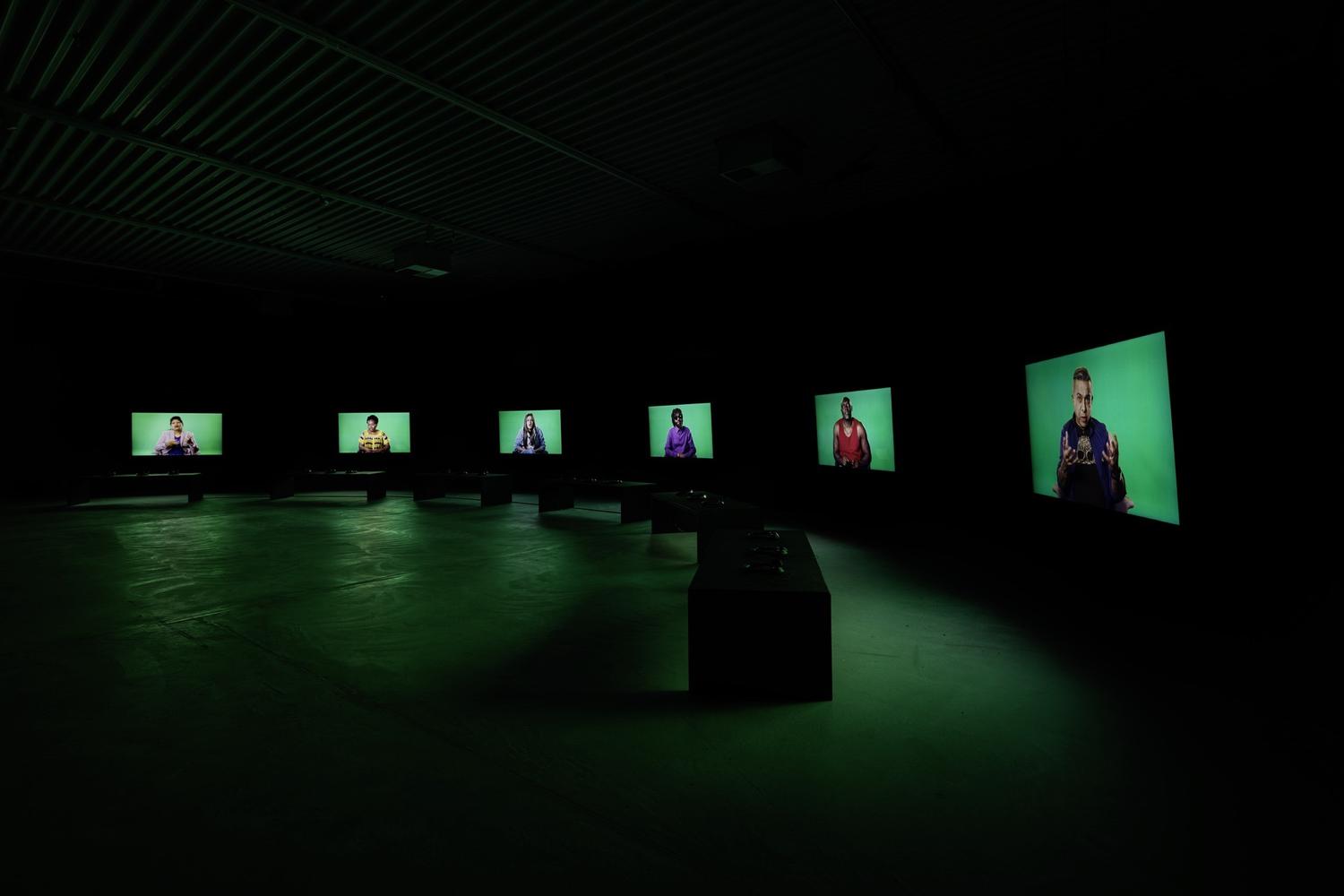
QUESTION BRIDGE

https://www.brooklynmuseum.org/exhibitions/question_bridge/


THE PHILADELPHIA PUBLIC HISTORY TRUCK

https://phillyhistorytruck.wordpress.com/


THE VOICES OF THE MANHATTAN PROJECT

https://www.manhattanprojectvoices.org/


MUSEUM OF MODERN ART

https://www.moma.org/research-and-learning/archives/oral-history


NATIONAL WOMEN'S HALL OF FAME

https://www.womenofthehall.org/women-of-the-hall/voices-great-women/


HIGHLY SUGGEST CHECKING OUT 

FINDING YOUR ROOTS

Henry Louis Gates, Jr. traces celebrity ancestry. 

Go to the link below to watch videos. 

https://www.pbs.org/weta/finding-your-roots/


WANT TO SEARCH YOUR OWN ANCESTRY? 


Check out Ancestry.com. Link below. 


CHECK OUT THE PODCAST MOTH RADIO HOUR 

FOR LIVE STORYTELLING EVENTS


Storytelling can be seen as a form of oral history. 
The historian/interviewer is not part of the conversation. A person composes their story for oral delivery to an audience. The stories in this podcast range from highly emotional to social commentary to humor.


AND LASTLY, IF YOU ARE A FAN OF THE TV SHOW 
THE OFFICE, CHECK OUT THIS 
ORAL HISTORY OF THE SHOW.


Saturday, November 13, 2021

Monuments


As communities face renewed high-profile debates on the role of monuments in public spaces, we must once again examine the civic, aesthetic, and historical contexts these influential objects inhabit. Against this backdrop, The Future of Monumentality Speaker Series will engage artists, historians, government leaders, and placemakers around issues of power, engagement, and representation. In the first panel, speakers will address monumentality itself; in the second, speakers will offer examples of alternatives to monuments as currently understood in the mainstream.


Saturday, March 20, 2021

Hair

 Culture

The customs, arts, social institutions, and achievements of a particular nation, people, or other social group.


The Hair Craft Project, Artist Sonya Clark

In the Collection of The Museum of Fine Arts, Boston
Purchase a Hair Craft Project Catalog Here!

Hairdressers are my heroes. The poetry and politics of Black hair care specialists are central to my work as an artist and educator. Rooted in a rich legacy, their hands embody an ability to map a head with a comb and manipulate the fiber we grow into complex form. These artists have mastered a craft impossible for me to take for granted.

Almost two decades ago, in a review of my work, Bill Gaskins wrote, “Hairdressing is the primordial fiber art.” I began the Hair Craft Project with his words in mind.
The project bridges boundaries between hair salons and art galleries as sites of aesthetics, craft, skill, improvisation, and commerce. Hairdressers were each supplied with my full head of hair and a canvas hand stitched with silk thread. Their challenge was to demonstrate their expertise in a familiar medium, hair, and translate it into a less familiar one, thread on canvas. For the yearlong span of the project, I became a walking gallery. The photographs document the temporary hairstyles created specifically for the project while the canvases provide a permanent example of the craft.

Featured stylists: Kamala Bhagat, Dionne James Eggleston, Marsha Johnson, Chaunda King, Anita Hill Moses, Nasirah Muhammad, Jameika and Jasmine Pollard, Ingrid Riley, Ife Robinson, Natasha Superville, and Jamilah Williams.

Sonya Clark


More work by Sonya Clark:

Sonya Clark


Sonya Clark


https://1708gallery.org/exhibitions/exhibition-detail.php?id=64

https://www.culturetype.com/2014/07/22/a-tale-of-two-flags-sonya-clark-at-virginia-museum-of-fine-arts/


PHOTOS: (1) Walla Walla woman, Estelle Steel-ye, about 1880. Smithsonian Institution. (2) Painting of famous frontier artist and chronicler of Native American culture, George Catlin. Head Chief White Cloud, Iowa tribe. About 1844. (The painted black hand indicated the chief's prowess in hand-to-hand combat.) (3) Cree Chief Pitkwahanapiwivin with dread locked hair. 1885. (4) Kootenai tribe member with roached hair adorned with feathers (or porcupine quills) and braids. 1920s. (5) Hopi maiden with "squash blossom whorls" (6) Manataka-style hair worn by famous Native actor, Wes Studi, in 1992 movie, "Last of the Mohicans" (7) George Catlin painting of Head Chief Buffalo Bull Back Fat, Blood tribe. 1832, (8) Flathead boy, Two Feathers. Montana, 1915. (9) Inuit woman, Nowadiuk, 1903. (10) Seminole woman with "board hair" (11) George Catlin illustration of Boy Chief of the Ojibwe. About 1834. (12) Cree warrior with "roached" hair spiked with bear grease and pigments from natural materials.


A sestina for a black girl who does not know how to braid hair

Your hands have no more worth than tree stumps at harvest.
Don’t sit on my porch while I make myself useful.
Braid secrets in scalps on summer days for my sisters.
Secure every strand of gossip with tight rubber bands of value.
What possessed you to ever grow your nails so long?
How can you have history without braids?

A black girl is happiest when rooted to the scalp are braids.
She dances with them whipping down her back like corn in winds of harvest.
Braiding forces our reunions to be like the shifts your mothers work, long.
I find that being surrounded by only your own is more useful.
Gives our mixed blood more value.
Solidifies your place with your race, with your sisters.

Your block is a layered cake of your sisters.
Force your lips quiet and sweet and they’ll speak when they need to practice braids.
Your hair length is the only part of you that holds value.
The tallest crop is worshipped at harvest.
So many little hands in your head. You are finally useful.
Your hair is yours, your hair is theirs, your hair is, for a black girl, long.

Tender-headed ass won’t last ’round here long.
Cut your nails and use your fists to protect yourself against your sisters.
Somehow mold those hands useful.
You hair won’t get pulled in fights if they are in braids.
Beat out the weak parts of the crops during harvest.
When they are limp and without soul they have value.

If you won’t braid or defend yourself what is your value?
Sitting on the porch until dark sweeps in needing to be invited, you’ll be needing long.
When the crop is already used what is its worth after harvest?
You’ll learn that you can’t ever trust those quick to call themselves your sisters.
They yearn for the gold that is your braids.
You hold on your shoulders a coveted item that is useful.

Your presence will someday become useful.
One day the rest of your body will stagger under the weight of its value.
Until then, sit in silence in the front with your scalp on fire from the braids.
I promise you won’t need anyone too long.
One day you will love yourself on your own, without the validation of sisters.
No longer a stump wailing for affection at harvest.